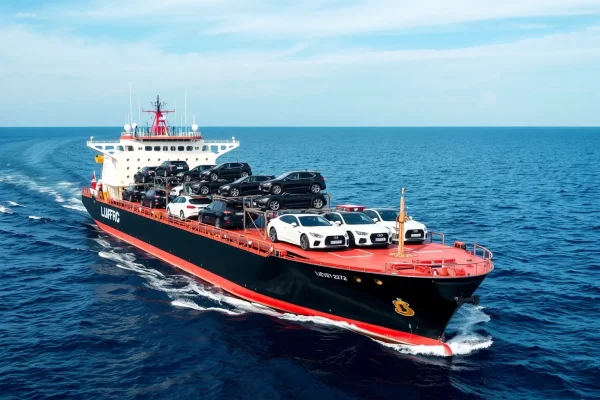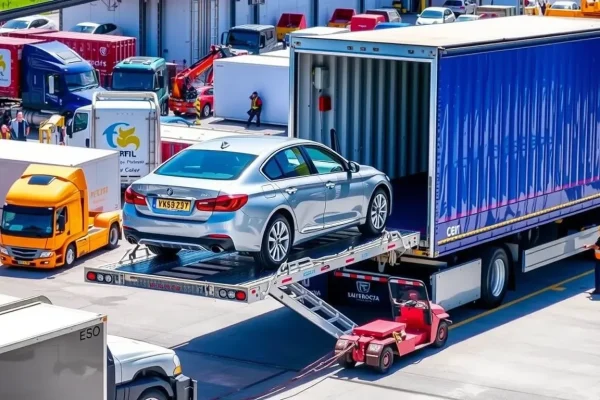
a car ship
In the intricate web of global trade, the cargo ship stands as a pivotal player, particularly when it comes to the transportation of automobiles. The modern shipping industry heavily relies on specialized vessels known as vehicle carriers or roll-on/roll-off (RoRo) ships, which are designed to transport a large number of vehicles across oceans. These vessels are a critical component of maritime transport, enabling the efficient movement of automobiles from manufacturing hubs to consumer markets worldwide.
The Role of Vehicle Carriers in Maritime Transport
Vehicle carriers are specialized types of transportation vessels that facilitate the movement of cars, trucks, and other vehicles without the need for containers. These ships are equipped with built-in ramps that allow vehicles to be driven on and off the vessel, a process known as roll-on/roll-off. This method is not only time-efficient but also minimizes the risk of damage that vehicles might otherwise incur if they were loaded and unloaded using cranes.
The Evolution of the Vehicle Carrier
The evolution of the vehicle carrier has been driven by the increasing demands of global trade. As the automotive industry expanded, so did the need for a reliable and efficient means of transporting vehicles across vast distances. The first purpose-built vehicle carriers emerged in the mid-20th century, and since then, they have grown in size and capacity to accommodate the burgeoning auto logistics needs of today.
Design and Capacity
Modern vehicle carriers are engineering marvels, often stretching over 200 meters in length and capable of carrying thousands of vehicles per voyage. These vessels are designed with multiple decks, maximizing space and allowing for the transportation of different vehicle types, from compact cars to large trucks and buses. The decks are adjustable, providing flexibility in accommodating various vehicle sizes.
Ocean Freight and the Automotive Industry
Ocean freight is a cost-effective mode of transporting large volumes of goods, and it plays a crucial role in the import/export of automobiles. The vast network of shipping lanes and sea routes that crisscross the globe enables manufacturers to distribute vehicles to markets in every corner of the world. Key ports of call serve as pivotal nodes in this network, where vehicles are offloaded, stored, and then distributed to dealerships and customers.
Challenges in Automotive Shipping
Despite its efficiency, automotive shipping faces several challenges; Weather conditions can lead to delays, and geopolitical tensions sometimes disrupt established sea routes. Additionally, the industry must continuously adapt to environmental regulations aimed at reducing emissions and improving fuel efficiency.
Environmental Concerns
The shipping industry is under increasing pressure to minimize its environmental impact. Innovations in ship design, such as more fuel-efficient engines and the use of alternative fuels, are being explored to reduce the carbon footprint of vehicle carriers. These advancements are crucial as the world moves towards more sustainable practices in all sectors, including maritime transport.
The Future of Auto Logistics
Looking ahead, the future of auto logistics is poised for transformation. Technological advancements, such as the integration of digital tools for tracking and managing shipments, are enhancing the efficiency and transparency of automotive shipping. Moreover, the rise of electric and autonomous vehicles presents new challenges and opportunities for the design and operation of vehicle carriers.
As the backbone of global automotive shipping, the car ship is indispensable in connecting manufacturers with consumers. Its role in the shipping industry is set to evolve as new technologies and environmental considerations shape the future of maritime transport. Through continued innovation and adaptation, vehicle carriers will remain a vital component of the global trade ecosystem, ensuring that the wheels of the world keep turning.